
Search for the best stem cell supplements and you get ranked lists, bold labels and very different prices. This guide does not rank brands, because no oral product has the independent evidence a serious ranking would need. Instead, it explains what these products contain, what the research does and does not show, and gives you a checklist to use on any bottle before you buy, including ours.
What is a stem cell supplement?
A stem cell supplement is an oral product (a capsule, tablet or powder) marketed to support the stem cells your body already has. It does not deliver working stem cells: no cell survives drying, encapsulation and stomach acid, and anything you swallow is digested like food. What the bottle actually holds is an extract, a plant compound or a blend of nutrients.
That puts these products in a different category from stem cell therapy at a clinic, where cells are collected or grown in a lab and injected by a doctor. The supplement is a daily wellness product; the procedure is a medical intervention with its own costs and risks. Comparing them as if they were two versions of the same thing is the most common mistake buyers make.
What ingredients do stem cell supplements contain?
Almost every product sold under this name falls into one of five ingredient groups. Knowing which group a bottle belongs to tells you more than its brand name or its price.
- Placenta extract: a concentrated extract of animal placenta (commonly sheep, pig or horse; human placenta is used in some Asian markets). It provides proteins, peptides and amino acids, not cells. Our capsules belong to this group.
- Blue-green algae extract: products based on Aphanizomenon flos-aquae (AFA), marketed with the idea that they help release stem cells from the bone marrow into the blood. The studies behind that idea are small, and several are linked to manufacturers.
- Plant stem cell extracts: extracts from cultured plant cells such as apple, grape or argan. A plant cell cannot become a human cell; these extracts are used for their antioxidant compounds, more often in skin creams than in capsules.
- Colostrum and protein formulas: products based on colostrum or whey, usually sold for immune or digestive support and sometimes presented under the stem cell label.
- Nutrient and botanical blends: combinations of vitamin D3, green tea extract, blueberry, carnosine, resveratrol or NAD+ precursors, often inside a proprietary blend that does not list individual amounts.
Some labels mix several groups at once. If you cannot tell from the label which group a product belongs to, that is already useful information.
Do stem cell supplements work?
No large, independent clinical trial has shown that an oral stem cell supplement improves a health outcome in people. Most of the research available is small, short, done in animals or in cell cultures, and often paid for by the company that sells the product. That does not make every ingredient useless; it means the honest description is general wellness support, not regeneration.
Two practical rules follow. First, be wary of any supplement whose label or website names diseases: in the United States, dietary supplements may only make claims about normal body structure or function, not about diseases. Second, set expectations that fit a wellness product: something you add to a routine of sleep, food and exercise, never a substitute for medical care.
How do you choose a stem cell supplement?
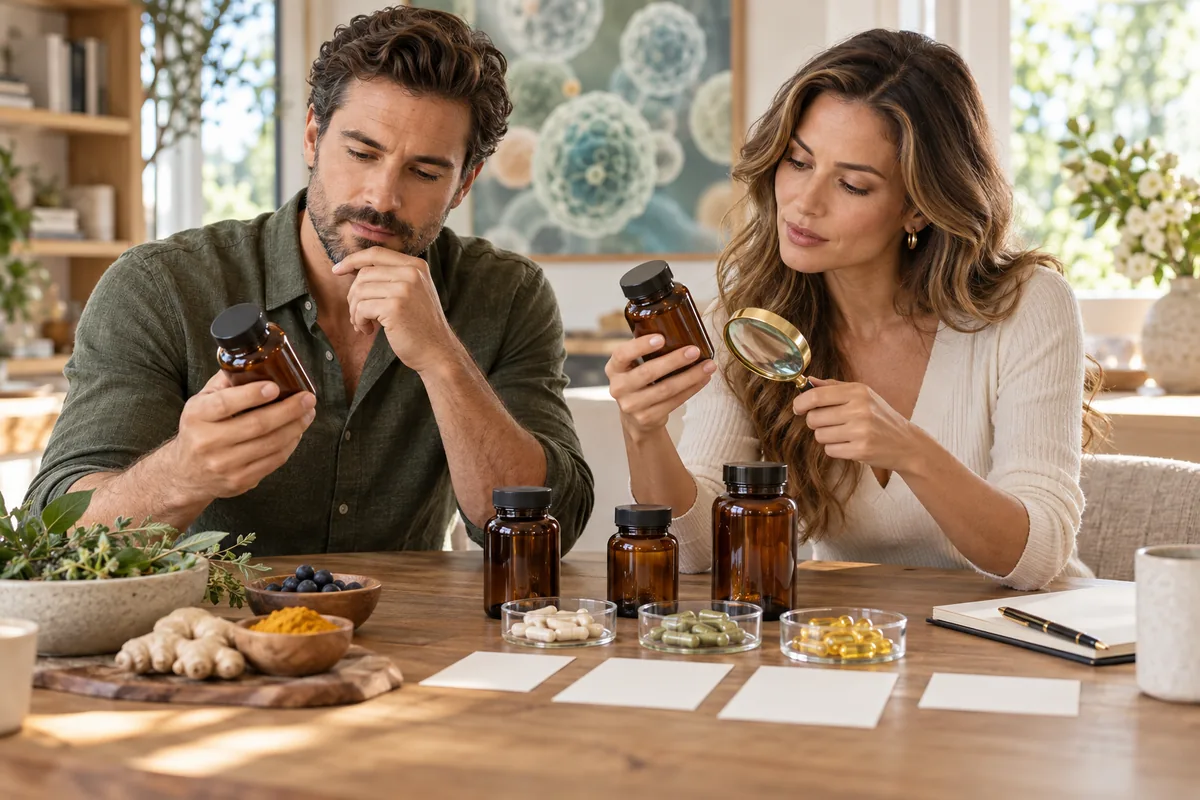
Judge the label and the company, not the marketing. A product that passes most of the checks below is a reasonable option to consider; a product that fails several of them is not the best choice at any price.
- The main ingredient is named together with its source (for example, placenta extract and the animal it comes from), instead of hiding inside a proprietary blend.
- The amount per capsule and the daily dose are stated in milligrams.
- The package shows a lot number and an expiration date.
- The company lists a physical address, a phone number and an email that someone actually answers.
- The label carries the statement that its claims have not been evaluated by the Food and Drug Administration, and nothing on it names a disease.
- Ideally, it has a third-party quality seal such as USP Verified or NSF Certified, programs that check that the contents match the label.
- The price and the number of capsules per package are clear, so you can work out the cost per day.
- There are no before-and-after photos, no promised result by a certain date and no pressure to buy a year's supply.
How much should a stem cell supplement cost?
There is no standard price, and a higher price does not mean stronger evidence. The fair comparison is cost per day: divide the price of the package by the number of days it lasts at the dose printed on the label. A cheap bottle with a tiny dose can end up costing more per day than an expensive one.
Keep the scale in mind too. Supplements are priced in tens or hundreds of dollars per package, while a single stem cell procedure at a clinic is usually quoted in the thousands. They are not substitutes for each other, so the useful question is not which one is cheaper but which one fits what you are actually looking for.
Are stem cell supplements safe?
For most healthy adults, the side effects reported are mild: stomach upset, headache or an allergic reaction to the source material. The larger risks come from interactions with medicines, from poorly controlled products, and from delaying medical care because a supplement seemed enough.
Talk to a doctor or pharmacist before taking any stem cell supplement if one of these applies to you:
- You are pregnant or breastfeeding.
- You have a hormone-sensitive condition, since placenta extracts can contain traces of hormones.
- You have cancer or a history of cancer.
- You take blood thinners, immunosuppressants, hormones or several medicines at once.
- You are allergic to the animal or plant the product comes from.
- You had a stem cell procedure recently; our guide to supplements to avoid after stem cell therapy explains why the timing matters.
Where do placenta extract capsules fit?
Placenta extract capsules are one of the five groups described above, and they are the product we sell. They contain placenta extract, not stem cells, and they are a wellness product, not a medical treatment. If you want a daily supplement with a clearly named ingredient and a company you can reach by phone in New York, they are an option to consider. If you are looking for help with a specific condition, the right first step is a doctor.
Important note
These capsules are a wellness supplement, not a medical treatment. They do not contain live stem cells and are not intended to diagnose, treat, cure or prevent any disease. Talk to your doctor before starting any supplement, especially if you have a diagnosed condition or take medication.
Frequently asked questions
What is the best stem cell supplement?
No oral product has the independent evidence needed to call it the best. A sensible choice is a supplement that names its main ingredient and source, states the dose in milligrams, shows a lot number, comes from a company you can contact and makes no disease claims, at a price per day you can keep up.
Do stem cell supplements contain stem cells?
No. They contain extracts, plant compounds or nutrients. No cell survives drying, encapsulation and digestion, and stem cell therapy is a separate procedure performed at clinics.
Are stem cell supplements approved by the FDA?
No dietary supplement is approved by the FDA before it goes on sale in the United States. Manufacturers are responsible for safety and for truthful labels, and the FDA can act against products that are unsafe or make illegal claims.
Can I take a stem cell supplement with my medications?
Ask your doctor or pharmacist first, especially if you take blood thinners, hormones or immunosuppressants. Bring the label so they can see the exact ingredients and amounts.
Related guides
Notice: this article is informational and is not medical advice. The products described are not a treatment or cure and do not replace diagnosis or care from a health professional.